
Items filtered by date: Tuesday, 16 December 2025
Thursday, 21 February 2019 11:11
Mining Indaba 2019
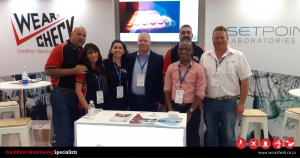
The WearCheck team of condition monitoring experts who attended Mining Indaba this month reports that they were delighted to chat with many customers at the WearCheck stand, as well as answering technical questions from people who are new to the concept of condition monitoring.
There was strong interest in WearCheck’s mobile laboratories, which are placed on-site in remote areas to make condition monitoring services more accessible in areas with limited infrastructure.
Another popular enquiry was regarding WearCheck’s site-specific fuel and lubrication improvement programmes that boost the bottom line for our customers by extending component life, reducing maintenance costs and increasing equipment availability.
WearCheck shared a stand with sister company Set Point Laboratories. The technical team members who attended Mining Indaba were (from left) Phillip Croucamp, Michelle van Dyk, Steven Lumley, Jon Hillary, Quentin Von Klesit, Moses Lelaka and Gerrit Fouché.
Published in
Blog
Monday, 18 February 2019 11:35
We're Hiring

WearCheck Lubrigard
Onsite Technical Support. Klipspruit Mine, Mpumalanga
Main Job Functions:
Qualified / Semi Qualified Diesel Mechanic/Fitter
Position Requirements:
Minimum Education – Grade 12, Tertiary Education (Diesel Mechanic/Fitter). Valid Drivers Licence. Must be experienced and competent in working on Mining Machinery such as Haul Trucks, ADT’s, Excavators, Loaders and Dozers. Preferably 2 years experience. Must be familiar with Filtration Systems on EME Equipment. Must be experienced and competent in Servicing and maintenance of this type of machines. Intermediate Computer skills. Supervisory experience.
Key Responsibilities:
Meeting set Targets (Filter replacement). Oversee WearCheck onsite samplers. Oversee WearCheck Oil Analysis Program. Client reporting. Managing improvement projects. Training- Samplers. Managing Suppliers (Installations)
Desirable qualities: Excellent interpersonal and communication skills, team player, responsible, accurate, attention to detail, computer literate, decision maker, good time management skills.
Availability: The successful candidate must be available to start as soon as possible.
Only CV’s sent to This email address is being protected from spambots. You need JavaScript enabled to view it. will be considered.
Applications close on 28th February 2019. If you have not received a response by 15th March 2019, please consider your application as being unsuccessful.
Published in
Blog
Wednesday, 06 February 2019 17:36
Super Rugby 2019 Viewing Schedule

SUPER RUGBY! If that got your attention then, like us, you’re also a rugby fan! To make sure that our fellow rugby fans don’t miss a single match during the 2019 Super Rugby tournament, we’ve created a handy viewing schedule – download it for free on our website.
The 2019 Super Rugby – the annual competition’s 24th season – sees 15 teams from five countries tackle each team in the league to see who will emerge victorious.
South Africa, New Zealand, Australia, Argentina and Japan will battle it out, kicking off on 15 February with matches between Highlanders vs. Chiefs (08.35am) and Brumbies vs. Rebels (10.45am)
In 2018, New Zealand’s Crusaders team was crowned the Super Rugby champs, after beating the South African Lions 37-18 in the finals.
Since being reduced from an 18-team competition in 2017, this year is the second season using the reduced 15-team format, which consists of three geographical conferences.
Be sure to keep 6 July free to watch the final match. The quarter finals take place on 22 June, while the semi-finals are on 29 June.
Click here to download our match schedule (Download Size: 4.1mb)
Published in
Blog
Monday, 04 February 2019 11:03
You talk, we listen…

Our annual customer survey was recently conducted, and we sincerely thank the people who took the time to give us feedback. Your answers are critical to how we re-shape our business services going forwards.
WearCheck sales developer Kay Meyrick extends her gratitude to customers for the positive feedback. These are some of the replies from our valued customers:
‘It has been 11 years now using WearCheck, so far [this] has done wonders for our company’
‘Overall, WearCheck provides an excellent service.’
’Keep up the good work.’
‘WearCheck helps us to be on top of premature failures and prevent unnecessary expenses.’
‘I would only like to thank WearCheck for their assistance.’
‘Very professional.’
‘I always encourage my friends to use WearCheck for condition monitoring.’
‘WearCheck has been a major factor in my passion to do my own maintenance on my vehicles.’
Lucky winner! Wendy Bester of Universal Equipment had her name drawn out of the hat to win the lucky draw prize for customers who completed WearCheck’s customer survey 2018. Here, Wendy accepts her cash prize in PE from Leon Marshall, WearCheck’s Eastern Cape representative.
Published in
Blog
Sunday, 27 January 2019 17:05
2019 Training Course Dates

Understanding oil analysis can help you and your company benefit when the condition of your machinery/components/fleets are monitored using oil analysis. Now is a good time to plan for when you or your employees will attend our next training course.
Here are the 2019 dates:
Oil Analysis 1: Understanding oil and its analysis. Two Full Days.
- Gauteng: 12-13 February
- Middelburg: 12-13 March
- Cape Town: 7-8 May
- Rustenburg: 11-12 June
- Bloemfontein: 16-17 July
- Pinetown: 13-14 August
- Namibia: 10-11 September
- Gauteng: 15-16 October
- Northern Cape: 12-13 November
Oil Analysis 2: Report interpretation. One Full Day.
- Gauteng: 14 February
- Middelburg: 14 March
- Cape Town: 9 May
- Rustenburg: 13 June
- Bloemfontein: 18 July
- Pinetown: 15 August
- Namibia: 12 September
- Gauteng: 17 October
- Northern Cape: 14 November
Oil Analysis One covers two full days and costs R6 660. Oil Analysis Two and the NetCheck course cover one full day each and each costs R3 450. All courses include course material, refreshments, giveaways and certificates. Prices exclude VAT and are subject to change.
For more details on course content, view Training at www.wearcheck.co.za.
For bookings contact Michelle van Dyk on This email address is being protected from spambots. You need JavaScript enabled to view it..
On-site training
All courses can also be presented at the customer’s premises for a minimum of ten delegates.
WearCheck also offers two more on-site courses:
- WearCheck Practical (in English or Zulu), a half day course costing R860 plus VAT per delegate
- WearCheck Customised – oil analysis for workshop technicians, a full day course costing R3 000 plus VAT per delegate.
For on-site training, there may be an additional charge for the lecturer’s travel and accommodation, if needed.
Arrange a training course near you
Training courses can also be arranged in any of the following areas:
- Bloemfontein
- Cape Town
- Kimberley
- Makopane
- Middelburg
- Nelspruit
- Port Elizabeth
- Rustenburg
- Steelpoort
- Botswana
- Namibia
- Tanzania (Mwanza)
- Zambia (Kitwe)
Published in
Blog
Saturday, 26 January 2019 17:53
WearCheck at Mining Indaba

African Mining Indaba 2019 takes place 4 – 7 February at the Cape Town International Convention Centre (CTICC).
Our expert condition monitoring programmes - including oil analysis and other reliability solutions techniques - are already saving maintenance costs and boosting machine availability for mining operations around Africa.
WearCheck makes these services widely accessible in remote areas by placing mobile laboratories on-site.
We’ve designed site-specific fuel and lubrication improvement programmes that have boosted the bottom line for our customers y extending component life, reducing maintenance costs and increasing equipment availability.
We invite you to come and talk all things condition monitoring with our technical team at Stand 615.
Published in
Blog
Thursday, 24 January 2019 09:56
A mine of information

In July, Quentin Gustav von Kleist joined WearCheck’s team in Johannesburg as a technical support consultant. Quentin brings with him a wealth of experience in the preventive maintenance arena, with particular knowledge of the mining industry and related components.
Prior to joining WearCheck, Quentin spent many years working in India for zinc and lead mines such as Hindustan Zinc, where he maintained mining machinery and repaired inoperative components. Armed with certification in the fundamentals of lubrication and oil analysis, Quentin and his team ensured that a large and varied range of equipment in the mines operated at peak performance, including dump trucks, loaders, drill rigs, raised bores, beamers, cutters, drill rods, stabs and more.
Quintin is already firmly-established in the WearCheck team that is on hand to assist customers with any technical support queries.
Published in
Blog
Thursday, 17 January 2019 10:17
Lube Tip 12: These additives don’t exist - Part 4

Part 4 of 4
OVER-GREASING ELIXIR One of the most common root causes of rolling-element bearing failure is over-greasing. This practice damages seals and shields, and causes uncontrolled heat excursions that accelerate wear and lubricant degradation. No additive has the capacity to work as a magic elixir under such distressful conditions.
CONCLUSION Reliability emerges from the optimum combination of quality lubricants and best practice lubrication. Don’t spend more money on premium lubricants hoping you can spend less on lubrication. This is a false economy. There is no substitute for vigilant inspection, frequent and thorough oil analysis, and well-deployed (and engineered) lubrication practices. No question, today’s additive technology can serve as a solution-provider across a wide range of potential problems that frequently plague machinery. Yet, they are unable to be miracle cures for numerous other maladies. Practitioners need an arsenal of tools and skills to get the desired reliability results. Begin with training and then follow with programmatic structure and procedures. Develop a culture of lubrication excellence. And remember, reliability is everyone’s responsibility.
This article appeared in the January/February 2009 issue of Machinery Lubrication
LUBE TIP by Jim Fitch of Noria Corporation
Published in
Blog
Tuesday, 15 January 2019 12:11
Transnet Training
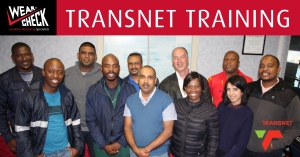
A group of Transnet employees recently underwent oil analysis training at WearCheck’s Pinetown office. The training course was conducted by WearCheck training consultant Jan Backer (back row, third from right).
Published in
Blog
Sunday, 30 December 2018 14:09
Lube Tip 12: These additives don’t exist - Part 3

Part 3 of 4
VARNISH AND SLUDGE PACIFIER Varnish and sludge are produced via many oil degradation pathways. Once they get infused into the oil and deposit on machine surfaces, there is no easy solution to eradicate their presence short of an oil change and flush. Additives may help slow the formation of varnish and sludge precursors, but they will do little to pacify damage after they form.
GLYCOL NEUTRALISER Ethylene glycol is mixed with water and used as a coolant in a wide range of machines. When allowed to invade a lubricant, it becomes a pungent contaminant that can wreak havoc in numerous ways. Sadly, the thought that there are lubricant additives that will neutralize the effects of glycol contamination is nothing but a fantasy. As much as 10 percent of all diesel engine lubricants in service have trace amounts of glycol contamination. Many are far more grossly contaminated.
SOOT TERMINATOR Soot can be dispersed by additives, but it can’t be easily expunged. Even dispersed soot causes wear when oil films become contracted, such as in cam lobe/follower contacts and at the ring reversal area on cylinder walls in diesel engines. Soot can also mop up important polar additives and prematurely remove them from active duty.
LUBE TIP by Jim Fitch of Noria Corporation
Published in
Blog