
The purpose of the test is to measure the concentration of wear metals (machine health), oil additives (oil health) and contaminants. These parameters are determined by the concentrations of various elements from the periodic table. Wearcheck measures 29 of these elements and they fall into the various categories such as copper which is a wear meal, calcium which forms part of an oil additive or silicon which is a constituent of dirt (contaminant). Note that quite a few elements can belong to more than one category.
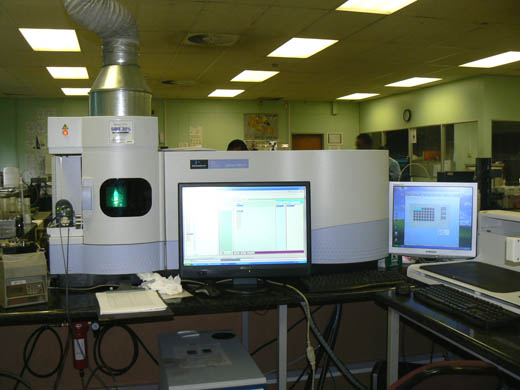 The oil sample is mixed with a suitable solvent and introduced into the plasma of the spectrometer. The plasma is generated by a powerful radio frequency discharge and very high temperatures can be achieved, as high as 10 000ºC which is as hot as the surface of the sun. When the different elements are subjected to such high temperatures they will emit light of different frequencies. Most of this light is in the ultra-violet part of the electromagnetic spectrum so would not be visible to the human eye but the ICP has detectors that can see these frequencies. The intensity of each frequency is proportional to the concentration of each element in the oil.
In order to interpret an oil analysis report accurately it is vitally important to know where the various elements come from and which of the three categories they can belong to. This technical bulletin will look at which elements belong to which categories and what the most common element sources are.
By far the biggest category is the wear metals, of which iron is the most common wearing element.
Iron – chemical symbol Fe (if some of the chemical symbols do not make sense it is because they come from the Latin name of the element, in this case ferrum). In engines the cylinder liners and the crankshaft are the major wearing components along with timing gears, shafts and valves. In gearboxes and drivetrain components iron is the major constituent of the gears, shafts and anti-friction (rolling element) bearings.
When iron reacts with water (which contains oxygen) and atmospheric oxygen, rust can form which may indicate contamination or component degradation. Finally, iron can also be a contaminant. Rust, containing iron, can be formed in cooling systems. If an internal coolant leak occurs whereby the coolant comes into contact with the lubricating oil then the coolant may evaporate at working temperature and pressure whilst leaving coolant additives and contaminants behind in the oil. This will be covered in more detail under sodium.
Aluminium – chemical symbol Al. The most common source of aluminium in engines is from the piston. Almost without exception, all pistons are made from aluminium or their alloys. In transmissions, torque convertors are made of aluminium. Hydraulic pump housings and housings in general are often made of aluminium. Thrust washers, plain bearings and bushes can also be made of the metal and found in a variety of components.
Aluminium can also be a contaminant. It is an additive component of some greases so if grease is transferring into an oil wetted component then aluminium may be present. Common dirt, dust, grit is highly abrasive and can be very dangerous to any lubricated piece of machinery. Traditionally dirt is detected by the presence of silicon, however, most dirt is a mixture of silicon and aluminium oxides so if dirt entry occurs then aluminium usually accompanies the silicon – usually in a ratio of Al:Si of between 1:2 up to 1:5.
Chromium – chemical symbol Cr. In engines, the rings are normally made of chromium or are coated with the metal. On rare occasions, the liners can be chromed and the rings are then made of cast iron. Shafts, gears and anti-friction bearings can contain trace amounts of chromium as an alloying metal with iron to form certain steels and this can occur in most types of component. Chromium can also be used as a surface hardening coating on gears. Chromium can be a contaminant too, in areas where the metal is being mined it can show up in the oil as an indication of dirt entry; note that dirt does not always have to consist of silicon (and aluminium).
Finally, chromium can sometimes be seen as an indication of an internal coolant leak. Certain types of coolant conditioners contain sodium chromate and once again, if water from the cooling system leaks into the oil then this can evaporate off leaving the chromium and sodium behind in the oil. This is usually seen in electromotive diesel applications.
Iron, aluminium and chromium can often be seen together in engine oil samples as they make up the metallurgy of the liners, pistons and rings. This is usually seen in conjunction with elevated silicon as dirt entry through the air intake system can cause these components to wear abnormally.
 Silicon – chemical symbol Si. Although silicon is usually seen as an indication of dirt entry it can have many different sources. Silicon is part of a chemical added to oils to stop them foaming so silicon can be an additive. Usually found in a concentration of 5 to 10 ppm, so do not be surprised to see silicon in new engine oil samples; do not panic, this is not due to dirt.
Silicon is found in chemicals used in coolant conditioners so it can show up, as a contaminant, if there is an internal coolant leak along with sodium. Greases contain silicon (particularly bentonite greases) and assembly compounds often contain silicone based chemicals that easily leach into the oil. The assembly compounds can generate very high levels of silicon but this is not an indication of a problem.
As well as being an additive and a contaminant, silicon can also be a wearing compound (it is not strictly a metal, so calling this a wear metal would be chemically incorrect). Silicon carbide is sometimes used in the construction of pistons to reduce their coefficient of expansion. Silicon can have many sources and can fit into all three categories.
Nickel – chemical symbol Ni. Nickel is most commonly seen as an alloy of anti-friction bearings (and sometimes gears) along with iron. Valves and valve guides may contain nickel and some turbine components. Coatings, similar to chromium can contain nickel.
Nickel is also a component of most heavy and medium furnace oils so this shows up in the oil as a combustion by-product making it a contaminant as well as a wear metal. This is normally seen in marine engine applications.
Vanadium – chemical symbol V. Vanadium is not often seen but can be a wear metal from turbine blades and valves. It also shows up as a combustion by-product in exactly the same way that nickel does.
Titanium – chemical symbol Ti. This metal appears as a wearing element in turbine components, springs, and valves. It may also be present if ceramic components have been used. Titanium, like, chromium can show up as a contaminant where dirt entry has occurred, particularly when titanium ores may be in the environment; this is quite common in mineral sand (dune) mining applications.
Cobalt – chemical symbol Co. Cobalt is almost never seen but if it does appear then it would normally come from turbine components or as an alloy in ant-friction bearings with iron.
Molybdenum – chemical symbol Mo. Molybdenum is another one of those metals that can fall into all three elemental categories. As a wear metal it is most commonly seen in automotive gearboxes as a component of the synchro rings. Some engines have the compression (top) ring coated with the metal.
It is seen as an additive in engine oils as part of the anti-oxidant package. Molybdenum disulphide (Mo-Di) is an after market additive than can be added to lubricants by the end user. Mo-Di is an anti-friction compound that has been used in lubricants for almost a century. Molybdenum disulphide can also be blended into gear oils that are to be used in very slow moving and heavily loaded applications such as dragline gearboxes.
As a contaminant it can show up in internal coolant leaks as part of the coolant additive package. It is also a component of grease so if damaged seals are allowing lubricant transfer it may appear in the oil as grease contamination.
Manganese – chemical symbol Mn. This metal is found as an alloying element with iron in some steels and may occur in shafts, valves, gears and anti-friction bearings. It is quite a common contaminant in equipment working in manganese mines where it indicates dirt entry. Some lead replacement fuels contain manganese as an anti-knock additive so it can show up as a combustion by-product in the oils of petrol engines using these types of fuel. In very rare cases manganese exists as an additive.
The following grouping of wear metals are all elements of plain bearings, the most common ones being copper, lead and tin. Silver, antimony and cadmium may be seen on rare occasions.
Copper – chemical symbol Cu. Copper has many wear metal sources although it, too, can be a contaminant and occasionally an additive. Copper comes from plain bearings, bushes, thrust washers, worm gears, sintered clutch packs and brakes. Anything with a 'yellow' metal component will contain copper. The alloy of copper and tin is called bronze whilst copper and zinc make brass. Bronze gears are frequently used as worm gears in worm drive gear boxes.
Very high levels of copper can leach from oil coolers and radiators as a contaminant. Cooling system components are frequently made of copper and this can leach directly into the oil. This does not mean that the cooler is dissolving and it is not an indication of a problem. However, it can be a little disturbing to see several hundred ppm of copper in a sample suddenly appear in an oil analysis report. Copper can also leach into the water side of the cooler and if this water gets into the oil it can evaporate off leaving the copper behind which is an indication of a problem.
Copper can be a component of some assembly compounds and may appear as a contaminant on newly assembled machinery. Like manganese, in very rare circumstances, copper may be seen as an additive.
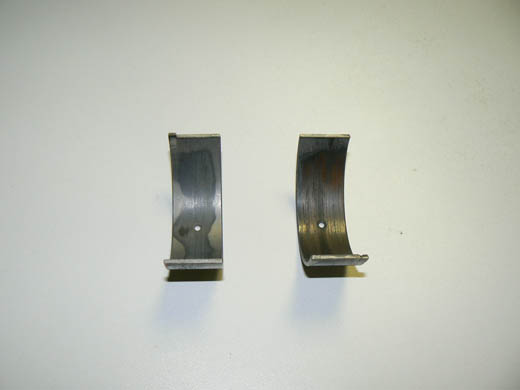
Tin – chemical symbol Sn. Tin is frequently alloyed with lead to form what is known as Babbit metal (white metal) and is the major constituent of a plain bearing overlay. This is most commonly found in the main and big end bearings of engines. Some pistons may have a tin flashing on them; this helps to conduct heat.
Solder is also an alloy of tin and lead so that any soldered joints may leach into the oil and this is sometimes seen with internal coolant leaks; it is not an indication of a problem but it can show up. Tin can be found as both a wear metal and a contaminant and on very rare occasions it is an additive in some specialty compressor lubricants.
Lead – chemical symbol Pb. This metal is the other major constituent of Babbit metal found in plain bearings (mains and big ends). It is also found in bushes and some more old fashioned clutch pack designs. Brakes systems can contain lead too. Some coatings may contain the metal.
As a contaminant it can leach from solder, like tin, from the cooling system. Lead used to be a common additive found in petrol so it would end up in the oil as a combustion by-product. These days it is unusual to see lead as a petrol additive but samples coming from across our borders may show very high levels of lead. As a very general rule of thumb it can be reckoned on one ppm of lead in the oil per one kilometer traveled.
Lead is found as an extreme pressure agent in some greases and many years ago industrial gear oils were lead based with the same additive. Environmental concerns mean that these products are not used anymore. However, gearboxes with a twenty year old charge of oil may show very high lead levels and every now and again a drum of the stuff will turn up.
Silver – chemical symbol Ag. Certain plain bearings in locomotive engines can contain silver. It is vitally important to use a zinc free oil in these applications as the zinc will attack the silver and destroy the bearing. Silver can be found in coatings and quite high levels can leach from silver based solder used in some cooling systems.
Antimony – chemical symbol Sb. Antimony is most commonly seen as an extreme pressure agent in grease so it can end up in the oil as a grease contaminant. In very rare occasions it can be an alloy with lead and tin in some exotic plain bearings.
Cadmium – chemical symbol Cd. Cadmium is rarely seen but it could be a constituent of plain bearings and some coatings.
Tantalum – chemical symbol Ta. This may be found in ceramic materials but is rarely seen.
Cerium – chemical symbol Ce. This is a rare earth metal and is also found in ceramic materials and again, is rarely seen.
Beryllium – chemical symbol Be. This is one of the first metals encountered in the periodic table and like cerium and tantalum is a component found in ceramic materials. It is also very important in jet aircraft engine oil analysis as beryllium is an alloying element in certain thrust washers and trace amounts of the metal can indicate a serious problem.
Zirconium – chemical symbol Zr. Zirconium is the last of the ceramic elements that is analysed. As with titanium it is a major constituent of mineral sands so shows up as dirt in machines working in these environments.
Lithium – chemical symbol Li. Lithium is only found as a contaminant. The metal is a very common additive used as a soap (thickening agent) in many greases. If it shows up in an oil sample it is a sure indication of grease contamination.
Sodium – chemical symbol Na. Throughout this technical bulletin there have been many references to internal coolant leaks and the elements associated with them. To re-cap, water in the cooling system can leak into the lubricating system and contaminate the oil. Often, at operating pressures and temperatures, this water evaporates off.
Most cooling systems should be treated with glycol and a coolant conditioner which will contain a variety of chemicals enabling the coolant to do its job and protect the cooling system from damage. It is these chemicals that get left behind in the oil and indicate that water has been present but is no longer evident. The most common chemicals contain sodium so this is the first indication of an internal coolant leak.
Other chemicals found in coolant conditioners contain elements such as molybdenum, phosphorus, chromium, boron and silicon. Elements that make up the physical structure of the cooling system and can leach into the oil (from either the water or the oil side of the cooler) include copper, tin, lead and silver.
Sodium can also be found as an additive in some engine oils (often replacing calcium or magnesium) but this is a lot rarer than it used to be. Some greases contain sodium as part of the soap and sodium will be evident if the oil is contaminated with sea water.
The last seven elements make up the bulk of the oil additive packages:
Magnesium – chemical symbol Mg. Magnesium is used in the formulation of detergents and corrosion inhibitors. The metal can be used in coatings, housings and casings and some engine blocks may contain magnesium making it a wearing element. It is also a component of sea water so may show up as a contaminant.
Calcium – chemical symbol Ca. Calcium is often found in conjunction with magnesium and forms the detergent and corrosion inhibitor part of the additive package. It can be used as a soap in the manufacture of greases and like magnesium it is found in sea water.
Zinc – chemical symbol Zn. Zinc is found in chemicals used to make anti-wear, anti-oxidant, detergent and corrosion inhibitor additives. Zinc is alloyed with copper to make brass so it can be evident as a wear metal.
Phosphorus – chemical symbol P. Phosphorus is a non-metal and is found in many additives, these include: anti-wear, anti-oxidant, extreme pressure, corrosion inhibitor, friction modifiers, metal deactivator and biocide chemicals. Phosphorus can be alloyed with tin and copper to form phosphor-bronze which is sometimes used to manufacture worm gears so it can occasionally occurs as a wear element.
Barium – chemical symbol Ba. This metal is fairly rare and used to be found in some of the older formulations of automatic transmission fluids. It can replace magnesium and calcium in the manufacture of detergents and corrosion inhibitors.
Boron – chemical symbol B. Boron is used in extreme pressure compounds and dispersants. It can also appear as a contaminant as it can be used in the manufacture of coolant conditioners.
Sulphur – chemical symbol S. This is the last of the 29 elements that are analysed. Sulphur is a natural constituent of base oil so it appears in almost all oil samples. Highly refined (API group III) and synthetic base stocks may contain no or very little sulphur but most API group I and II bases will contain about 5000 ppm sulphur which is quite expensive to remove in the refining process. Sulphur is also found in many additives and these include: anti-wear, anti-oxidant, extreme pressure, corrosion inhibitor and metal deactivator additives.
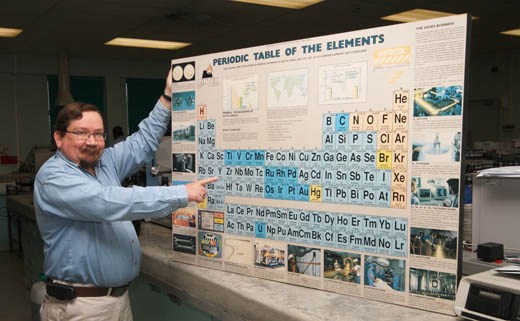 This brings us to the end of our selective journey through the periodic table of chemical elements. Metals, non-metals and chemicals alike can appear in a huge variety of guises and they can belong to one, two or all three of the major element categories – wear metals, contaminants and additives. It is only by considering the bigger picture of taking into account all the results (what is known as holistic diagnosis) that the correct source of the element can be determined.
By John Evans.